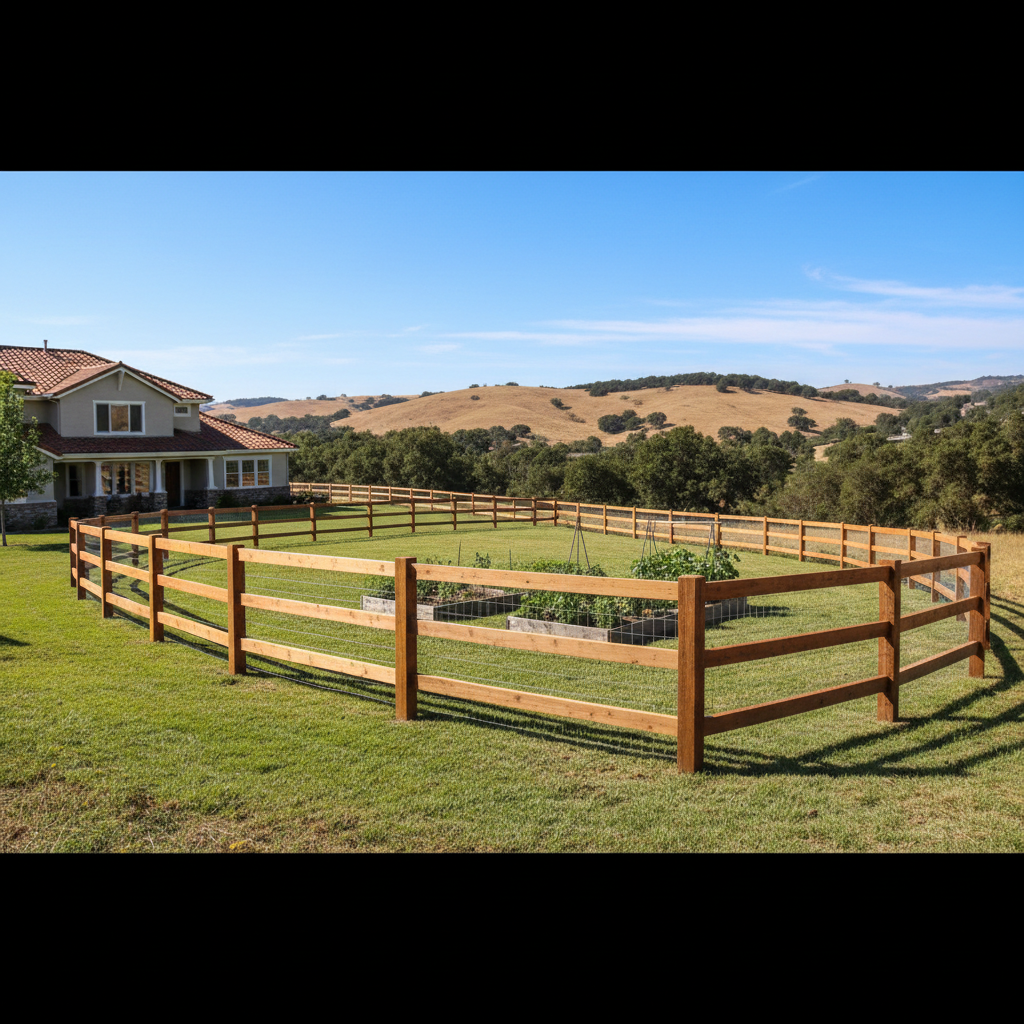
So, you are looking to put up some farm fencing here in Vallejo. Maybe you have some new livestock, or you are finally defining those property lines, or perhaps you are just tired of the deer treating your crops like an open buffet. Whatever the reason, a good farm fence is a big investment, and you want it done right. Alpha Fencing Vallejo has seen its share of projects, and we can tell you that solid planning makes all the difference.
Let us break down what you need to know to get your farm fencing project off the ground and built to last in Vallejo.
Understanding Your Project Timeline for Farm Fencing in Vallejo
A farm fencing project is not usually an overnight job. You are looking at a few distinct phases, and each one takes time. Generally, you can expect the whole farm fencing process, from initial thought to final inspection, to span anywhere from a few weeks to a couple of months. This depends on the size and complexity of your Vallejo property and the type of farm fence you choose for your Vallejo farm.
- Initial Planning and Research (1 to 2 weeks): This is where you figure out what you need for your farm fencing in Vallejo. What is the farm fence's purpose? What kind of animals are you containing, or what are you keeping out? This determines the type of farm fence, such as barbed wire, woven wire, high-tensile, or electric, and its height. You will also want to measure your property lines and get a rough idea of the linear footage for your Vallejo farm fencing project.
- Permits and Approvals (2 to 6 weeks, or more): Do not skip this step for your Vallejo farm fencing. Many fence installations in Vallejo, especially for perimeter fences or those exceeding certain heights, require permits from the City of Vallejo. This can take a while, so factor it into your schedule for your Vallejo farm fencing. A good contractor should help you navigate this, but it is ultimately your responsibility as the homeowner in Vallejo.
- Contractor Selection and Design (1 to 3 weeks): You will get bids, check references, and finalize your farm fence design for your Vallejo property. This is an important step, so do not rush it.
- Material Ordering and Delivery (1 to 4 weeks): Once you have picked your contractor and design for your Vallejo farm fencing, materials need to be ordered. Specialized farm fencing materials might have longer lead times than standard residential fencing materials.
- Site Preparation and Installation (1 to 3 weeks): This is the active construction phase for your Vallejo farm fencing. This includes clearing the fence line, setting posts, stringing wire, and installing gates. The actual farm fence installation can often be done in a few days to a week for smaller projects, but larger farm fences will naturally take longer in Vallejo.
- Final Inspection and Cleanup (a few days): Once the farm fence is up, your contractor should do a final walk-through with you and clean up the site in Vallejo.
What to Expect During the Farm Fencing Process in Vallejo
When the crew shows up for your farm fencing project in Vallejo, things are going to get busy. Here is a rundown of what usually happens during farm fencing installation:
- Site Assessment and Marking: Before any digging starts for your Vallejo farm fence, the crew will confirm the fence line. This often involves locating property pins. They will mark where posts will go and identify any obstacles for the farm fencing.
- Utility Locates: This is very important for farm fencing in Vallejo. Before anyone puts a shovel in the ground, all underground utilities need to be marked. Your contractor should handle calling 811, but make sure it happens. Hitting a gas line or electrical conduit is a nightmare nobody wants during a farm fencing project.
- Post Installation: This is the backbone of your farm fence. For farm fencing in Vallejo, posts need to be set deep and strong, especially with Vallejo's expansive clay soil. That soil swells when it is wet and shrinks when it is dry, putting a lot of stress on farm fence posts. We always make sure posts are set at proper depths, often 24 to 36 inches, with concrete footings to handle that movement. Corner posts and gate posts are even more important and need extra reinforcement for your farm fencing in Vallejo.
- Fencing Material Installation: Once posts are secure, the actual farm fencing material goes up. Whether it is woven wire, barbed wire, or high-tensile, proper tensioning is key to a long-lasting farm fence that will not sag in Vallejo.
- Gate Installation: Gates for your farm fencing need to be sturdy, properly hung, and open and close smoothly. They are often the most used part of a farm fence, so they need to be built to take a beating in Vallejo.
- Cleanup: A professional crew will clear away all debris and old fencing materials. They will leave your property tidy after the farm fencing installation in Vallejo.
How to Prepare Your Vallejo Property for Farm Fencing
You can do a lot to make the farm fencing process smoother and potentially save some money in Vallejo:
- Clear the Fence Line: Walk the proposed farm fence line and clear out any brush, small trees, or large rocks. The less the crew has to clear, the faster and cheaper the farm fencing job will be.
- Secure Animals and Valuables: If you have livestock, make sure they are in a secure area away from the farm fencing construction zone. Move any outdoor furniture, equipment, or sensitive landscaping that might be in the way of the farm fencing work.
- Mark Obstacles: If you know about any underground irrigation lines, septic systems, or other buried features not covered by 811, mark them clearly for the farm fencing crew.
- Access: Make sure there is clear access for equipment and materials to the farm fence line.
- Discuss with Neighbors: If your farm fence is on a property line, talk to your neighbors beforehand. It can prevent headaches down the road for your farm fencing project in Vallejo.
Questions to Ask Before Signing a Contract for Farm Fencing in Vallejo
This is where you protect yourself and make sure you are getting a quality farm fencing job in Vallejo. Do not be afraid to ask tough questions: