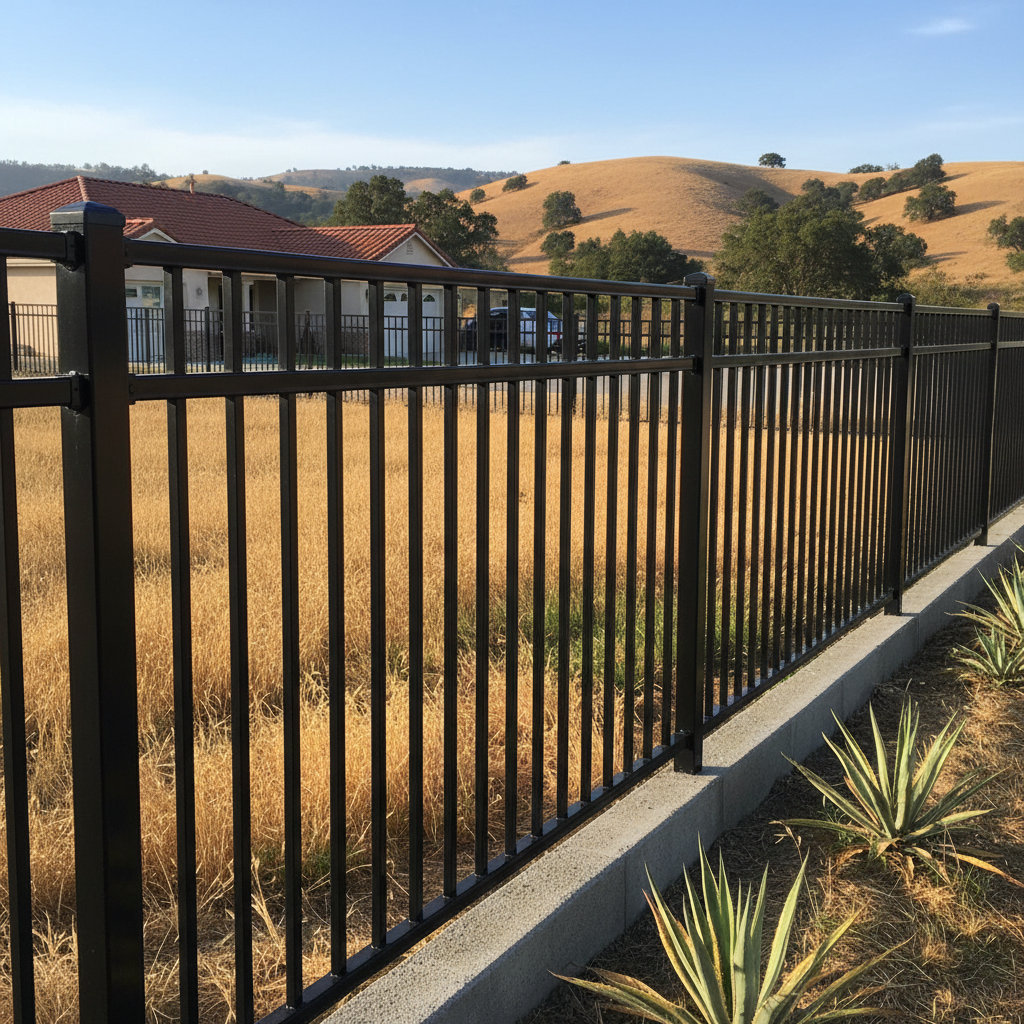
What's the deal with aluminum fence quality? Aren't they all the same?
Nah, not by a long shot. This is one of those things where you really do get what you pay for, you know? You've got your big box store kits, which are usually thinner gauge aluminum, often with plastic caps and hardware. They're cheaper up front, sure, but they dent easier, fade faster, and that hardware can get brittle in our Vallejo sun.
Then you've got the professional-grade stuff. We're talking heavier gauge aluminum, often powder-coated with a thicker, more durable finish. That holds up way better against UV rays and general wear. The pickets are stronger, the posts are sturdier, and the gates? They're built to last. It's designed to withstand kids, pets, and the occasional rogue basketball without bending out of shape. I always tell folks, if you want something that looks good and stays good for decades, invest in the better material. It'll save you headaches and money down the road.
Do I need a permit for an aluminum fence in Vallejo?
Most of the time, yeah, you probably do. The City of Vallejo has specific rules about fence height, setbacks from property lines, and even materials, especially if you're on a corner lot or near a public right-of-way. Generally, fences over 6 feet tall in the rear or side yards, or over 3 feet tall in the front yard, will require a permit. But even shorter fences can sometimes trigger a permit if they're in a specific zone or if there's a unique property line situation.
It's not just about height, though. You also need to make sure you're not building on an easement. I've seen folks get into trouble because they didn't check their property survey first. The last thing you want is to build a beautiful new fence only to be told you have to tear it down. Always check with the Vallejo Planning Division before you start any major fence project. It's a pain, but it's less of a pain than a stop-work order, right?
How deep do fence posts need to go for an aluminum fence?
This is crucial for stability, especially with our clay-heavy soils in parts of Vallejo. For most residential aluminum fences, I'm usually recommending posts go at least 24 to 30 inches deep, and often deeper for taller fences or gates. We're talking about a third to half the height of the fence panel, plus a bit extra. The key is to get below the frost line, which isn't a huge concern here in Vallejo, but more importantly, to get enough leverage in the ground to resist leaning or shifting over time.
We set posts in concrete, of course, making sure the concrete is sloped away from the post at the top to shed water. You don't want water pooling around the base of your posts, even if they're aluminum, because it can affect the concrete and the surrounding soil. Proper depth and concrete work are what keep your fence standing straight and true for years, even with kids climbing on it or strong winds blowing through.
Can aluminum fences be installed on a slope?
Absolutely, they can. That's one of the big advantages of aluminum over some other materials. There are two main ways we handle slopes: racking and stepping.
- Racking: This is where the fence panels are designed to pivot at the post connections, allowing them to follow the natural contour of the ground. The top and bottom rails stay parallel to the slope. This gives a really clean, continuous look, which is great for properties with a gentle, consistent grade. Most good quality aluminum fences are designed to rack a certain amount, usually up to 20-30 degrees.
- Stepping: For steeper or more uneven slopes, we'll 'step' the fence. This means each fence panel is installed level, but then drops down a certain amount at each post to the next panel. It creates a stair-step appearance. You end up with small gaps underneath the fence at each step, which some folks don't mind, especially if they aren't trying to contain small pets.
Which method we use depends on the specific slope of your yard and what kind of look you're going for. We'll measure your yard carefully to figure out the best approach.
How long does an aluminum fence installation usually take?
That really depends on the size of the project, the terrain, and what kind of access we have. For an average residential backyard in Vallejo, say 150-200 linear feet, you're usually looking at anywhere from 2 to 5 days from start to finish. That includes digging the post holes, setting the posts in concrete, letting the concrete cure, and then installing the panels and gates.
The curing time for concrete is a big factor. Even quick-setting concrete needs a good 24-48 hours before you put any real stress on the posts. We don't rush that part because a strong foundation is everything. If we're removing an old fence, dealing with a lot of roots, or if the ground is super rocky, that can add a day or two. But generally, it's a pretty efficient process once we get going. We always aim to keep your property tidy and minimize disruption.
What about maintenance? Do I need to do anything to keep it looking good?
This is where aluminum really shines compared to wood or even some vinyl. The maintenance on a good quality aluminum fence is super minimal. You don't have to paint it, stain it, or worry about rust like you would with iron. The powder-coated finish is designed to be tough and weather-resistant.
Mostly, it's just a matter of giving it a good wash once or twice a year. A hose and maybe some mild soap and water will usually do the trick to get rid of any dirt, dust, or pollen buildup. If you've got sprinklers hitting the fence regularly, you might see some mineral deposits, but those usually wipe off easily. Check the gate hinges and latches periodically to make sure they're still operating smoothly; a little lubricant can go a long way there. That's about it. It's pretty much set it and forget it, which is why so many folks in Vallejo choose aluminum for their homes.
Can I install an aluminum fence myself, or should I hire a pro?
Look, I'm not going to tell you it's impossible to DIY an aluminum fence. If you're handy, have the right tools, and plenty of time, you *could* do it. But I've seen enough DIY projects go sideways to tell you that hiring a professional, like us at Alpha Fencing Vallejo, is usually the smarter move for most homeowners.
Here's why: it's not just about digging holes and screwing panels together. It's about precise measurements, ensuring posts are perfectly plumb and spaced correctly, dealing with slopes, understanding property lines and easements, and making sure gates are hung right so they don't sag. A professional crew has the specialized tools, the experience to troubleshoot unexpected issues (like hitting a buried utility line or a massive rock), and the know-how to get it done efficiently and correctly the first time. We also know the local codes inside and out. You're investing in a long-term asset for your home; you want it done right so it looks good and lasts.